A 10 Year Commitment to Cultivate 1,500 Practitioners on the Central Coast of California
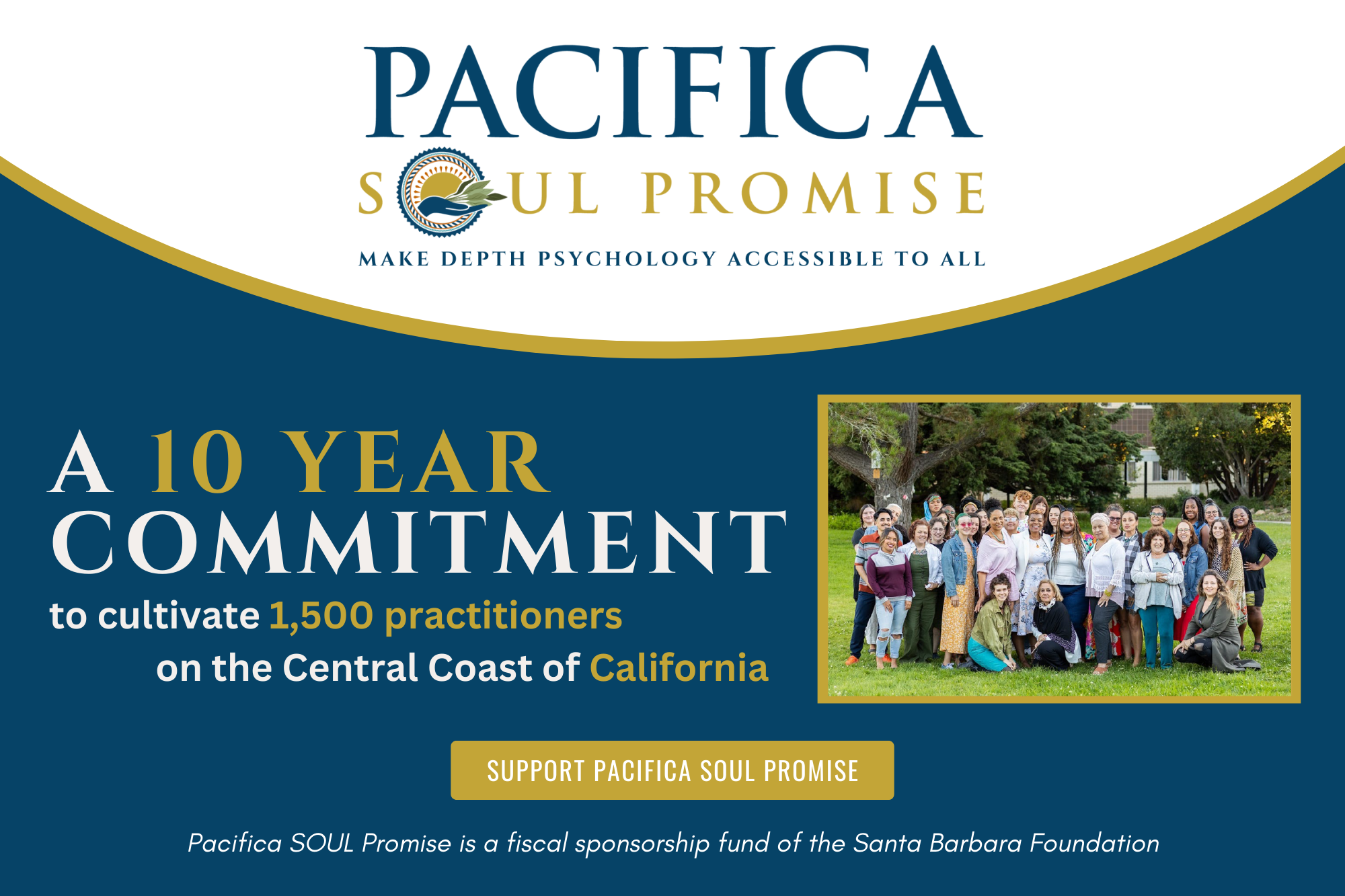

A 10 Year Commitment to Cultivate 1,500 Practitioners on the Central Coast of California




David Odorisio, Ph.D., currently the Co-Chair of Pacifica’s Mythological Studies program, will be leading the launch of a new M.A./Ph.D. program in Fall 2024, in Psychology, Religion, and Consciousness. This is the final part in a two-part interview

Connie Alexander-Boaitey is the co-founder of Gateway Educational Services, advocating for Santa Barbara’s underserved students through education. She is also the current president of the Santa Barbara NAACP. On April 20th, the NAACP is holding the “Black Women’s Health Equity Conference” in Santa Barbara, a free event for Black women from Santa Barbara, Ventura, Santa Maria & Lompoc. PGI President & CEO Dr. Leonie H. Mattison will be speaking at and participating in the conference. We’re delighted to hear more about Connie’s work in Part I of II of this interview, which is part of the Pacifica Soul Promise Series.
David Odorisio, Ph.D., currently the Co-Chair of Pacifica’s Mythological Studies program, will be leading the launch of a new M.A./Ph.D. program in Fall 2024, in Psychology, Religion, and Consciousness.
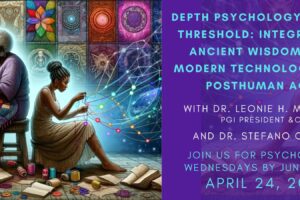
Dr. Mattison’s talk in April, “Depth Psychology at the Threshold: Integrating Ancient Wisdom and Modern Technology in a Posthuman Age” will explore the convergence of depth psychology with Al, as technology opens the door to a future beyond our wildest imaginings. Leonie Mattison will posit that by making the choice to embrace Al, we will transcend physical and economic barriers to create a community that welcomes all.

Connie Alexander-Boaitey is the co-founder of Gateway Educational Services, advocating for Santa Barbara’s underserved students through education. She is also the current president of the Santa Barbara NAACP. On April 20th, the NAACP is holding the “Black Women’s Health Equity Conference” in Santa Barbara, a free event for Black women from Santa Barbara, Ventura, Santa Maria & Lompoc. PGI President & CEO Dr. Leonie H. Mattison will be speaking at and participating in the conference. We’re delighted to hear more about Connie’s work in Part I of II of this interview, which is part of the Pacifica Soul Promise Series.


Immerse yourself in Pacifica’s transformative learning community through a retreat program, professional training, or cutting edge conference featuring leaders in the depth psychological and healing traditions.





Pacifica Graduate Institute is accredited by the WASC Senior College and University Commission (WSCUC), 985 Atlantic Avenue, Suite 100, Alameda, CA 94501, 510.748.9001, and is approved by the State of California Board of Private Postsecondary Education (BPPE) and the U. S. Department of Education.
Lambert Campus
249 Lambert Road,
Carpinteria, CA 93013
Ladera Campus
801 Ladera Lane,
Santa Barbara, CA 93108