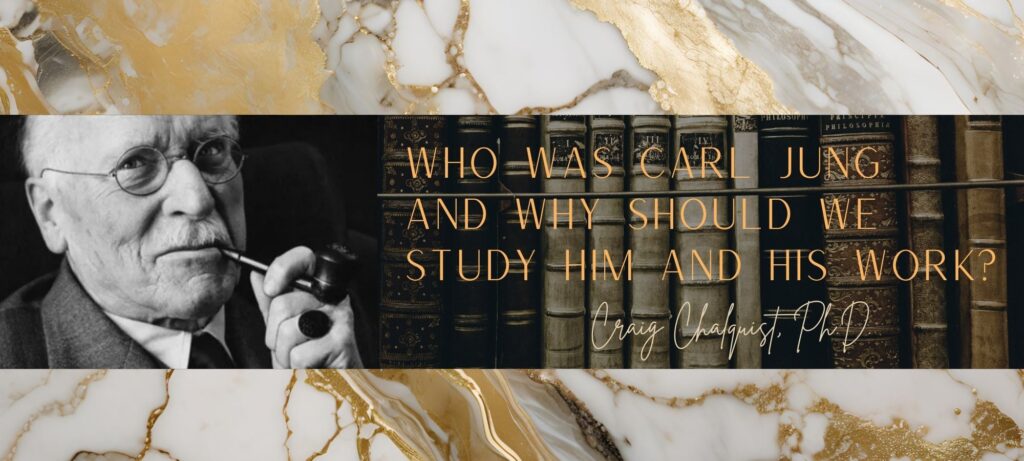
Carl Gustav Jung was born in 1875, died in 1961, and lived in Switzerland all his life, although he traveled now and then. He was a psychiatrist, seeing patients and pioneering various techniques in experimental research before focusing on psychoanalysis and then on evolving his own kind of depth psychology. He created innovative methods for working with symptoms, dreams, fantasies, visions, and even works of art on the level of psychological symbolism.
An interview with Ph.D. Clinical Psychology Alumnus Sarette Zecharia, Ph.D.

An interview with Ph.D. Clinical Psychology Alumnus Doug Henry.
Keiron Le Grice is a Co-Chair of the M.A./Ph.D. in Depth Psychology with Specialization in Jungian and Archetypal Studies (Hybrid-DJA & Fully Online-DJO) program. He is also the author of several books, including the recently published The Way of the Archetypes: Volumes I, II, and III.

Glen Slater has been teaching at Pacifica for over twenty years and is currently the Associate Chair of the M.A./Ph.D. in Depth Psychology with Specialization in Jungian and Archetypal Studies (Hybrid-DJA & Fully Online-DJO). He also teaches in the M.A./Ph.D. in Mythological Studies with Emphasis in Depth Psychology and is the author of Jung vs Borg: Finding the Deeply Human in a Posthuman Age.

Dr. Lionel Corbett is Core Faculty in Pacifica’s Ph.D. in Depth Psychology with Specialization in Integrative Therapy and Healing Practices program, as well as the author of The Soul in Anguish: Psychotherapeutic Approaches to Suffering.

Elizabeth Éowyn Nelson, Ph.D., is Core Faculty in the Ph.D. in Depth Psychology with Specialization in Integrative Therapy and Healing Practices, as well as the author of Psyche’s Knife: Archetypal Explorations of Love.

Safron Rossi, Ph.D., is Core Faculty in the M.A./Ph.D. in Depth Psychology with Specialization in Jungian and Archetypal Studies and the author of The Kore Goddess: A Mythology & Psychology.

Keiron Le Grice is a Co-Chair of the M.A./Ph.D. in Depth Psychology with Specialization in Jungian and Archetypal Studies (Hybrid-DJA & Fully Online-DJO) program. He is also the author of several books, including the recently published The Way of the Archetypes: Volumes I, II, and III.

Evans Lansing Smith, Ph.D., is Core Faculty in the M.A./Ph.D. in Mythological Studies with Emphasis in Depth Psychology program, and the author of many books, including The Descent to the Underworld in Literature, Painting, and Film: 1850-1950: The Modernist Nekyia.