
Congratulations to Chantal Noa, PhD, Assistant Professor and Associate Chair of the Psychology, Religion, and Consciousness program, on her recent publication, Becoming Earth: Prehumanistic Consciousness, and Trans-Species Sentience in the Practice of Tracking, in Volume 3, Issue 1 of Ecokritike.
Ecokritike is an international, open-access, double-blind peer-reviewed journal dedicated to Environmental Humanities, Literary Theory, and Cultural Criticism. The journal explores the complex relationship between nature and culture beyond traditional binaries, examining evolving concepts of subjectivity, agency, and citizenship while imagining pathways toward sustainable futures in a more-than-human world.
Earlier this year, Dr. Noa also participated in the Frontiers of Knowledge symposium in Aspen, which explores consciousness in the living world. Her presentation, “How Human Consciousness Developed in Concert With the Nonhuman World,” examined prehumanistic consciousness, the role of tracking in the development of human intelligence, and how the philosophy of tracking might help usher in an Ecozoic Era—one characterized by mutual flourishing among all Earth’s inhabitants.
Read more about Dr. Noa’s work in a recent opinion piece in the Aspen Daily News.
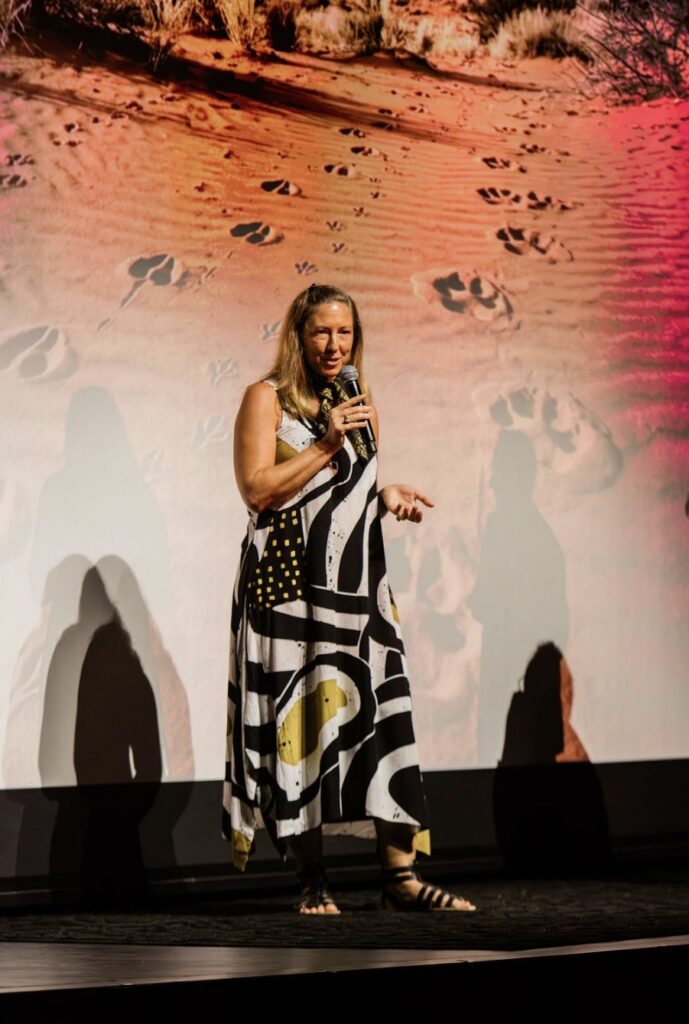
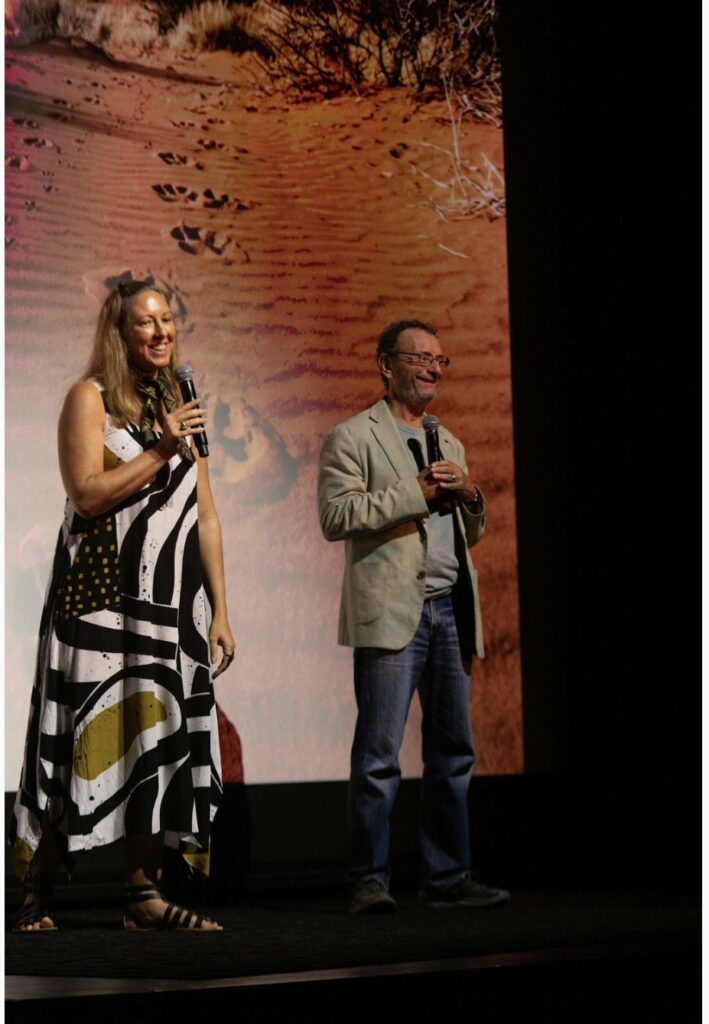
Chantal Noa and Jeremy Lent at the Frontiers of Knowledge symposium

Dr. Chantal Noa Forbes is a transdisciplinary and transnational scholar and educator working at the intersection of ecology, spirituality, and culture. Chantal’s work examines the metaphysical and ecological significance of decolonial and Indigenous perspectives on multispecies ontology, transspecies consciousness, and human-and-more-than-human relations. Before earning her Ph.D., Chantal spent twenty years working in social documentaries, environmental media, and agricultural communications across Africa, Southwest and Southeast Asia, and Europe. Chantal has been a visiting assistant professor of anthropology at Randolph-Macon College in Virginia and core faculty at the California Institute of Integral Studies and at Pacifica Graduate Institute in California.