
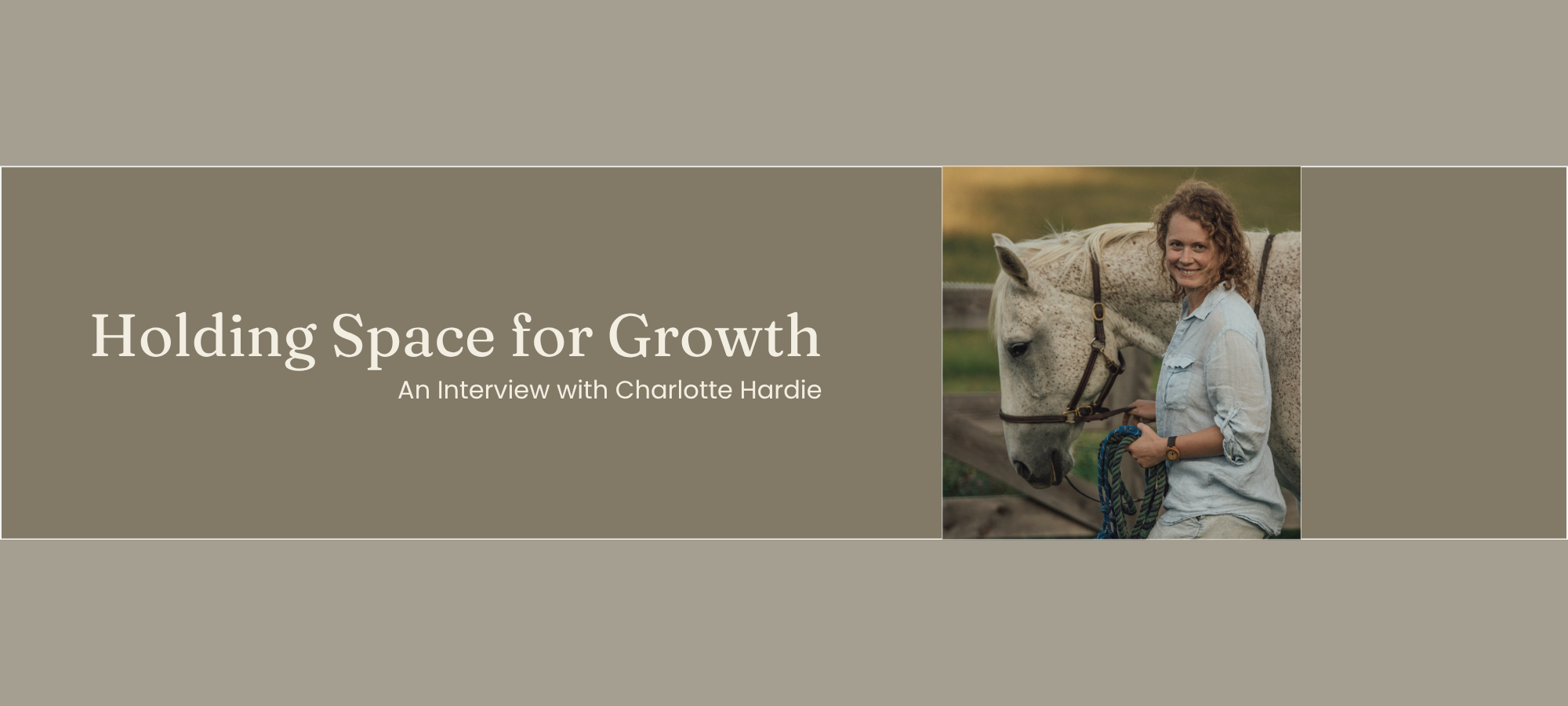
Holding Space for Growth: An Interview with Charlotte Hardie
Charlotte Hardie is a graduate of the M.A. Depth Psychology and Creativity with Emphasis in the Arts and Humanities program. In a recent interview she details her teaching approach centered around art, animals, and immersive environments that emphasize curiosity, presence, and emotional connection.
To find out more about the M.A. Depth Psychology and Creativity with Emphasis in the Arts and Humanities program, visit here.
Pacifica: Can you share a bit about your journey and what first drew you to working with children through art, animals, and farm life?
Charlotte Hardie: I was first drawn to working with children through the impact my own teachers had on me. There were moments in high school and college when a teacher recognized something in me that I had not yet seen in myself, and instead of shaping it or directing it, they held space for it to develop. That experience stayed with me. When I feel genuinely moved by something, I want to share it. Teaching became a natural extension of that. Over time, I found that working with children through art, animals, and farm life creates a setting where that kind of recognition and growth can happen organically. There is less pressure to perform and more room for curiosity, relationship, and discovery.
My work is not about instructing toward a specific outcome, but about creating an environment where something alive in the child can emerge. That approach has shaped both by my early experiences as a student and by my studies at Pacifica, where I deepened my understanding of how to hold space for that kind of process.
Pacifica: You describe creativity as a force that moves us out of the analytical mind and into the body. When did you first begin to experience creativity in that way?
Charlotte: began to experience creativity in that way in college when I found myself in an art class I had not planned to take. Up until that point, my creative experiences, like music, were structured and disciplined. I was used to practicing toward something known.
In the art studio, that shifted. I would begin projects without knowing what they were supposed to become, which was uncomfortable at first. My instinct was to try to think my way through it. But there were moments, often close to deadlines, when thinking stopped working. I had to begin without a clear plan.
When that happened, something else would take over. The work would start to move on its own, and I felt more like I was following it than controlling it. That was the first time I understood creativity as something that happens through the body and through attention, rather than through control.
That experience deepened later through yoga and through my work with horses. Both require presence and responsiveness rather than force. You cannot think your way into connection in those spaces. You have to be in your body and in relationship. Creativity, for me, now feels like that same process. It is something I enter into and participate in, rather than something I try to manage from a distance.
Pacifica: Your work brings together art, imagination, animals, and the natural world. How do these environments open pathways into emotion and intuition that traditional learning spaces sometimes cannot?
Charlotte: Being in relationship with animals consistently brings me out of my head and back into my body. Left to my own tendencies, I can become analytical, rigid, and overly focused on figuring things out. Many of our systems reinforce that way of operating through linear thinking, planning, and measurable outcomes.
Animals interrupt that pattern. They require presence rather than strategy. When I am with them, I cannot rely on thinking alone. I have to feel, respond, and attune. This shift opens access to emotion and intuition in a very immediate way. It softens the nervous system and creates space for curiosity, play, and connection. I also find animals deeply inspiring in their authenticity and physical presence. They are not performing or trying to become something else.
That quality has a direct impact on creativity. When I am in relationship with animals, I feel more open, more grounded, and more receptive. Inspiration becomes something I can access through presence rather than something I have to wait for. It moves creativity from something abstract into something embodied and alive.
Pacifica: Horses and other animals seem to play a significant role in your teaching life. What have relationships with animals taught you about creativity or human psychology?
Charlotte: Animals, especially horses, are true co-teachers in my work. They shape the environment as much as I do. They bring a grounding force that organizes attention and energy. They naturally invite awareness, responsibility, and care. In that way, they teach relational skills that are difficult to replicate in a purely human or classroom-based setting.
Through my relationship with animals, I have also learned that creativity is not constant or linear. It moves in cycles. There are periods of activity and expression, and there are periods of rest and integration. Animals live in rhythm with those cycles, and being around them has helped me respect that timing in myself.
They have also taught me the importance of emotional honesty. Animals respond to what is actually present, not what is performed. They do not require you to change what you are feeling, but they do require you to be aware of it. That has deepened my understanding of embodiment, presence, and the role of emotion in both creativity and psychological life.
Pacifica: When you began searching for graduate study, what was it about Pacifica that felt like the right intellectual and creative home for your questions?
Charlotte: When I began searching for graduate study, I was looking at both MFA programs and psychology programs. Both were important to me, but neither fully reflected the way those two fields were already intertwined in my work and in my life.
What I was looking for was a place that could hold creativity, imagination, and psychological inquiry together, rather than separating them.
When I found Pacifica through a friend, it immediately felt aligned. The program gave language and structure to questions I had already been living into. It offered a way to explore the deeper layers of experience, including symbol, imagination, and the unconscious, within a psychological framework.
It felt like a place where both the intellectual and the experiential aspects of my work could exist together.
Pacifica: How did your studies at Pacifica deepen or reframe your understanding of creativity as a psychological and transformative force?
Charlotte: My studies at Pacifica helped me understand creativity not just as expression, but as a fundamental psychological process. I began to see creativity as something that is constantly moving within us, shaping how we process experience, meaning, and change. It is not limited to artistic output. It is present in how we adapt, imagine, and reorganize our inner world. I also came to understand that creativity has a regenerative quality. When it is engaged, it builds energy rather than depleting it. It can move through periods of intensity and rest, and those cycles are part of its function.
This reframed creativity for me as a life force within the psyche, one that has the capacity to transform experience when it is allowed to move and take form.
Pacifica: Why do you think creativity is essential, not just for artists, but for the human psyche?
Charlotte: Creativity is essential because it is part of how we make meaning and stay in relationship with our own lives. Without it, experience can become fixed or rigid. Creativity allows for movement, for new perspectives, and for the integration of what we go through.
It is not limited to making art. It shows up in how we think, how we relate, how we problem solve, and how we imagine possibilities. In that sense, creativity is a form of psychological health. It keeps the inner world responsive and alive rather than closed or static.
Pacifica: Looking ahead, how do you hope to continue integrating creativity, imagination, and depth psychology in your work with others?
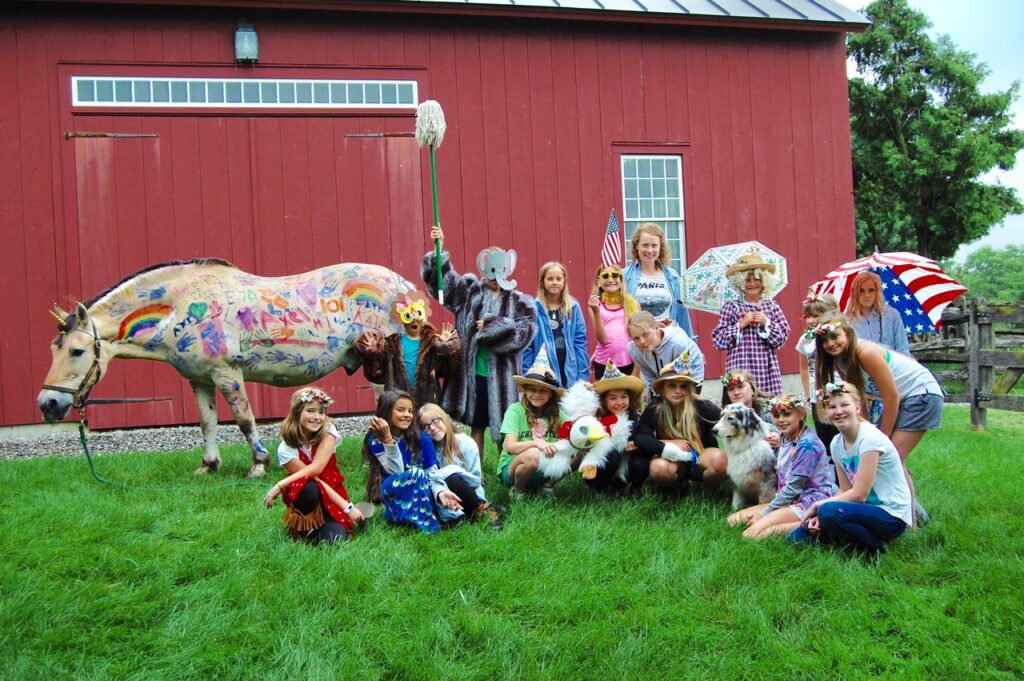
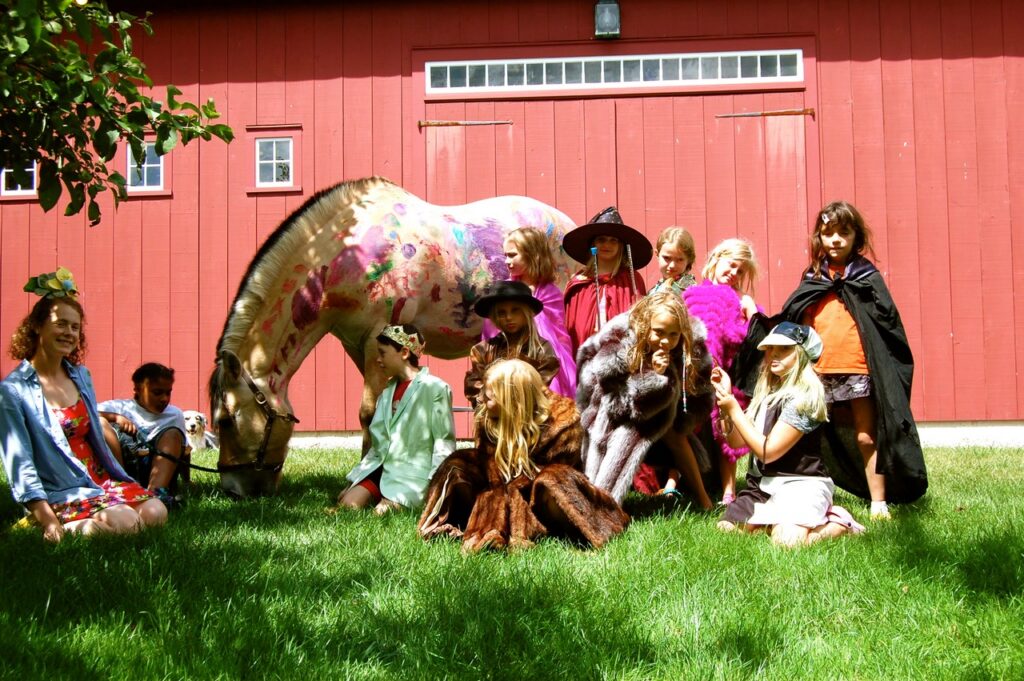
Charlotte: I look forward to continuing to develop spaces where creativity, imagination, and psychological awareness are not separate, but part of the same process. In my work with children, I use art, animals, and the environment as entry points into deeper experience. I want to continue refining that work, supporting environments that invite embodiment, reflection, imagination, and relationship.
Alongside teaching, I am expanding my creative work through collaboration and making more art. I want to bring ideas into form through writing, visual work, and shared creative process, in a way that stays connected to the same depth and presence that informs my teaching.
My intention is to continue integrating these threads so that creating and teaching remain in active relationship, each strengthening and informing the other.
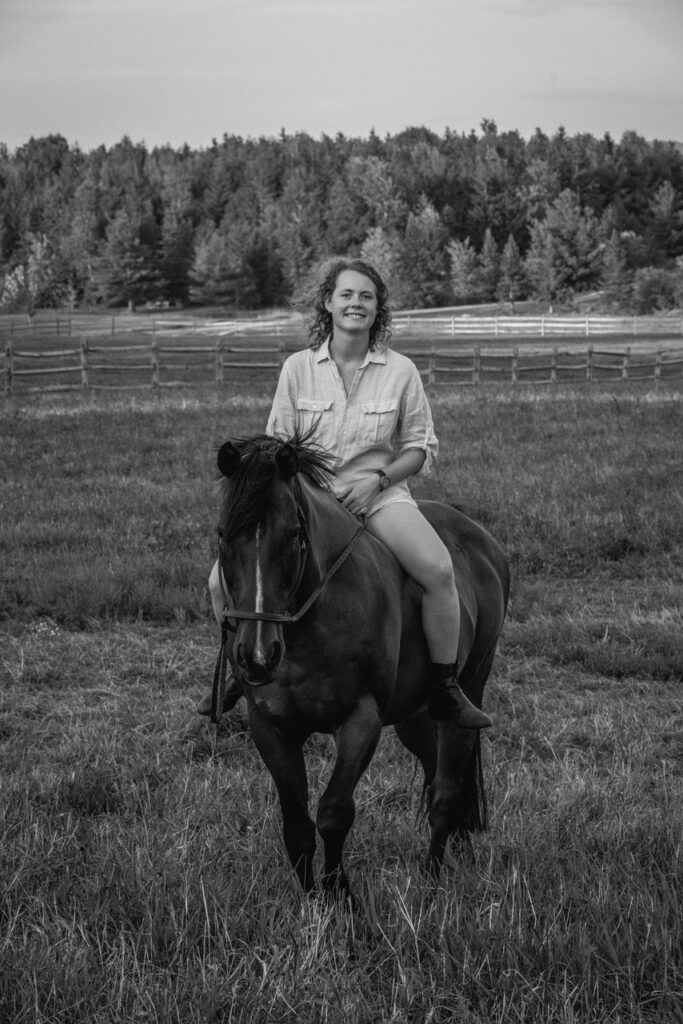



Charlotte Hardie holds a Master’s degree in Depth Psychology and Creativity from Pacifica Graduate Institute, as well as a double major in International Political Economy and Studio Art from Colorado College. Her interdisciplinary background reflects a lifelong curiosity about how systems, stories, and the inner life intersect—and how expression can be a pathway to connection, insight, and joy. In recent years, she has also immersed herself in the study of feminine rhythms, cyclical living, and hormonal wisdom—practices that further inform her work with both children and adults.
Charlotte makes art to listen—both to what’s within and to what’s around her. In her teaching, she creates spaces of safety, wonder, and authenticity. Whether in the studio, the barn, or the woods, her sessions are rooted in presence, play, and deep respect for each person’s voice and rhythm.