Fully Online Mythology and Religious Studies
Now Accepting Applications for Fall 2026
By discerning the underlying similarities and threads in the world’s myths and traditions, we better understand our shared humanity, while honoring the diverse ways human beings live and make meaning of their experience.
Request More Information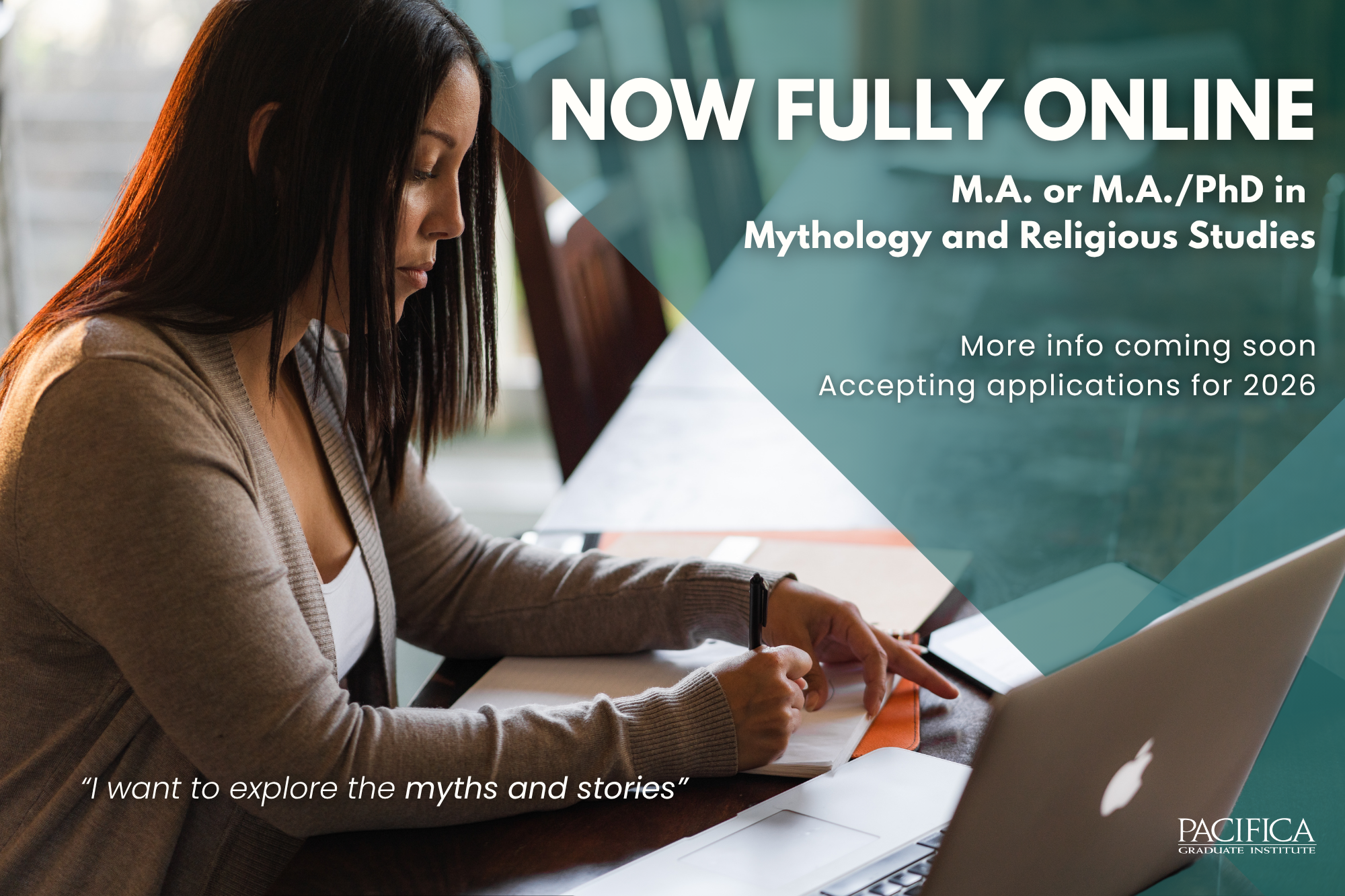

M.A. or M.A./Ph.D. in Mythology and Religious Studies

M.A. or M.A./Ph.D. in Mythology and Religious Studies
Now Fully Online for Fall 2026
State Authorization: Click to View States Pacifica is Authorized to Enroll By Program.
We live in an era hungry for meaning. As mechanistic worldviews give way to more complex, reanimated ways of understanding the world, the study of myth, religion, story, and dream has never been more vital — personally, culturally, and ecologically. Myths and religious traditions hold vast storehouses of narrative, image, and wisdom. They reveal the unconscious currents running beneath the surface of the present and prepare us to imagine possible futures. Questions of belonging and alienation, the sacred and the secular, land and power, desire and mortality, faith and violence — all converge in the living tapestry of mythology and religious studies.
Pacifica’s Mythology and Religious Studies program is the only doctoral program in the country dedicated to the multicultural and crossdisciplinary exploration of human experience through myth and religion in dialogue with depth psychology. Guided by internationally recognized scholars, authors, and educators, the program invites students into the mythological, folkloric, archetypal, and sacred structures of the stories that shape our lives — in religion and spirituality, ecology and the arts, popular culture and politics. Students read widely and deeply across traditions and centuries, engaging texts such as Homer’s Odyssey, the Ramayana and Mahabharata, the Yoga Sutras, the Tibetan Book of the Dead, Greek tragedies, medieval grail legends, fairy tales, indigenous futurist fiction, and feminist retellings.
Patrick Mahaffey, Ph.D. Faculty Emeritus explains Mythological Studies at Pacifica
Contact the Admissions Advisor
- Michael Mirabella, Admissions Advisor
- Phone (call or text): 805-881-1311
- Email Address: mmirabella@pacifica.edu
Program Schedule
The Master of Arts degree is awarded after the first two years of study and successful completion of a comprehensive examination. Students seeking the doctorate degree engage in a third year of course work that includes a sequence of research courses and the development of a concept paper for the dissertation. The fourth and fifth years of study focus on dissertation writing and research. Continuing supervision is provided for the completion of the dissertation.
- The Program meets on a quarterly basis, with summer quarters off.
- Students meet for Fall, Winter, and Spring semesters.
The curriculum carries a balance of four areas of emphasis: Religion, Literature, Depth Psychology and Culture, and Research. The courses offered in this curriculum overview represent a model of the balance of these areas you will see throughout your course curriculum. Individual courses may be subject to change as they are periodically rotated through the active curriculum to maintain the program’s vibrancy and contemporaneity.
How the Online Format Works
Students will have weekly 1.5-hour live Zoom group sessions for each course, supplemented by asynchronous engagement with course content, their instructors, and other students. This could include discussion posts, group collaborations, advisory meetings, rehearsals, and/or multi-media engagement, depending on the particular course and its modalities and objectives.
Throughout the program, students:
-
- Tap into the roots of the mythic knowledge and its human resonances
- Engage critically and responsibly with fundamental questions of knowledge and ultimate reality — the epistemic and ontological perspectives that underlie how different traditions understand what is real and what can be known.
- Examine myth and religion’s deep connectedness to place, language, culture, body and the more-than-human world;
- Read closely and critically wide-ranging works of literature, such as The Tibetan Book of the Dead, Homer’s Odyssey, the Greek tragedies, the Hebrew Bible, the Ramayana and Mahabharata, the Yoga Sutras, indigenous futurist fiction, medieval grail legends, fairy tales, and feminist tellings;
- Investigate the contemplative practices of the world’s religious traditions and the spiritual technologies of earth-based knowledge systems;
- Study the mythic and archetypal aspects of contemporary literature, current events, and popular culture;
- Develop innovative approaches to storytelling and mentor others in the power of storytelling to transform and renew culture.
- Analyze the role of mythology and religion across time and cultural contexts, including the role of eurocentrism, colonialism, its legacies, and reparative movements in shaping how myths are told, received, and reclaimed.
At the cusp of a paradigm shift in which outmoded mechanistic, reductive modes of thinking are being replaced by more complex, reanimated worldviews, the study of myth, story, dream, and folklore has ancestral, cultural, ecological, and planetary relevance. The study of myth—with its storehouse of narratives, cosmological and geological knowledge, vital images and metaphors—can help guide our personal and collective transformations. Myths reveal the unconscious narratives of the past and the present, thus preparing us for possible futures. Encounters with the more than human community, and issues of alienation and belonging, memory and the imagination, the sacred and the secular, desire and sexuality, land and power, faith and violence—all co-mingle in the tapestry that comprises mythological and religious studies.
Guided by internationally recognized scholars, authors, and educators, Pacifica’s Mythological Studies Program invites students to understand the mythological, folkloric, and archetypal structures of the stories that play out in many different arenas all around us—religion and spirituality, ecology and the arts, popular culture and politics.
Coursework sequences sustain inquiry across multiple domains:
- The world’s religious and mythological traditions including conversations within and between Hinduism and Buddhism, Judaism, Christianity, and Islam, indigenous and African diasporic cosmologies, yoga traditions, and goddess traditions;
- Re-visionings of myth in literature, film, theater, music, art and theory;
- third space and borderlands perspectives, , decolonial options, and emancipatory ritual and praxis;
- depth psychological perspectives of Sigmund Freud, C. G. Jung, Marie-Louise von Franz, James Hillman, Marion Woodman, and Joseph Campbell;
- personal transformation courses on dreams, visions, memoir and autobiography;
- alchemy and the interweaving of psyche and nature;
- theoretical and methodological approaches to the study of myth, religion, and ritual, —both western and nonwestern—culminating in original dissertation research.
Students learn in a small group setting with direct teaching, mentoring, and advising by core faculty throughout the program. Two student-run journals provide students with opportunities for experience in editing and publication in academic and creative writing. The curriculum is further enriched by an annual colloquium lecture given by distinguished guest scholars—which has included s Maria Tatar (Harvard University), Jeffrey Kripal (Rice University), Yvonne Chireau (Swarthmore College), Shelley Haley (Hamilton College), and Amy Hale—who address critical issues in the study of myth and contemporary culture. Graduates of the program find their personal and professional lives enriched through the transformative power of myth. Alumni utilize their degree in a range of professions such as education, psychology, healthcare, the arts, filmmaking, religion, business, politics, law, non-profits, chaplaincy, and community and environmental affairs.
Program Goals
The program’s curriculum is designed to help students achieve six primary learning objectives or goals that are distributed across four domains of the curriculum:
Mythology and Religious Traditions
- Interpret the primary myths and rituals of a variety of religious, spiritual, and cultural traditions.
Myth and Literature
- Interpret the mythological and archetypal aspects of literature.
Depth Psychology and Culture
- Critically apply the hermeneutics of depth psychology with optional application of other contemporary theoretical approaches.
- Interpret the mythic themes and dynamics that are present in contemporary events and popular culture.
Research and Scholarly Writing
- Critically evaluate and utilize scholarly approaches.
- Critically evaluate cultural and epistemological assumptions, especially those pertaining to diversity and dialogue.
What you will gain:
- Deep engagement with the world’s mythological and religious traditions — from the cosmologies of Greece, Rome, Egypt, and the Celtic world to Hinduism, Buddhism, Christianity, Islam, Judaism, indigenous traditions, African diasporic religions, alchemy, and goddess traditions.
- The capacity to read myth and religion as living forces that shape art, music, literature, film, politics, and ecology.
- Facility with depth psychological perspectives — Freud, Jung, Hillman, von Franz — and their application to culture, dream, and the imaginal life.
- Advanced skills in close reading, scholarly writing, and original research.
- Personal enrichment and professional transformation catalyzed by sustained engagement with the power of mythological and sacred imagery.
- Spiritual and intellectual growth rooted in the liberal arts and humanities.
- Critical awareness of decolonial, feminist, and cross-cultural frameworks for studying myth and religion.
- A community of scholars, mentors, and collaborators committed to carrying this work into the world.
- An understanding of immense variety of multicultural ways of knowing represented by the world’s great traditions of mythology, literature, and religion.
- A deep appreciation of the importance of mythology in the history of art, music, and philosophy.
- A dynamic engagement with the archetypal energies of the dream, seen through the lens of the depth psychology of Freud, Jung, Hillman, and Von Franz.
- An understanding of gender, sexuality, and power in mythological and religious traditions..
- An understanding of the complex interrelationships between individual, Nature, and community.
- Intimate knowledge of the canonical works of Classical, American, Asian, European, and World Literature.
- An understanding of the sustained power of myth in contemporary art, music, literature, and film. An understanding of the mythological dimension underlying contemporary events and history.
What You Can Do With A Mythology and Religious Studies Degree
The Mythology and Religious Studies program is designed for students who seek to enrich their personal and professional lives through the transformative power of myth, developing highly advanced and universal skill sets useful in a broad range of professions. Graduates go on to become professors, independent scholars, and educators in the humanities; authors, editors, and consultants working at the intersection of mythology, spirituality, and culture; creatives and creative consultants in the entertainment industry; chaplains, spiritual directors, and pastoral counselors serving in hospitals, hospices, universities, and community settings; founders and directors of nonprofit organizations dedicated to research, education, and social transformation; museum curators, filmmakers, podcasters, and cultural consultants bringing mythological and religious literacy to public audiences; and leaders in community organizations, retreat centers, and faith-based initiatives. With prior or additional training and licensure, graduates also pursue careers in depth psychology, Jungian analysis, and counseling. Overall, students gain a mythological vocabulary that facilitates cross-cultural and social engagement and perspective. Wherever students are called to contribute their expertise, this program prepares them to bring the wisdom of the world’s mythological and religious traditions to bear on the urgent questions of our time.
Our alumni include:

Kwame Scruggs, Ph.D. (2009)
Kwame Scruggs is Founder and Executive Director of the Ohio-based nonprofit Alchemy Inc., which uses mythological storytelling, drumming, and mentorship to assist urban adolescent males develop a sense of life purpose. Dr. Scruggs accepted the 2012 National Arts and Humanities Youth Program Award from First Lady Michelle Obama at the White House on November 19th, 2012, for his work using myths and drumming to empower urban youth.

Li Sumpter, Ph.D. (2014)
Li Sumpter is a multidisciplinary artist and independent scholar who applies strategies of worldbuilding and mythic design toward building better, more resilient communities of the future. Li’s creative research and collaborative design initiatives engage the art of survival and sustainability through diverse ecologies and immersive stories of change. Li is a cultural producer and eco-arts activist working through MythMedia Studios, the Escape Artist Initiative and various arts and community-based organizations in Philadelphia, PA, and across the country. Li has taught courses on Myth and the Media, Film and Ecology, and Afrofuturism at Haverford College and Moore College of Art and Design. She also teaches special topics for youth and adult courses at the Pennsylvania Academy of Fine Arts, the Barnes Foundation, and Fleisher Art Memorial. Li was a recipient of the Sundance Institute and Knight Alumni grant, a 3-time recipient of the Leeway Art and Change Grant, and a 2022 nominee for the distinguished Pew Fellowship.

Joanna Gardner, Ph.D. (2019)
Joanna Gardner is a writer, mythologist, and magical realist. She co-founded and co-leads the Fates and Graces Mythologium, an annual conference for mythologists and friends of myth. Joanna serves as Managing Editor on the Educational Task Force of the Joseph Campbell Foundation, and as a thought leader with the think-tank iRewild, where she works on the EcoStories initiative. Joanna’s research focuses on creation myth and the creative process. Her publications appear in a variety of venues, many of which you can find on her website, joannagardner.com.

Devon Deimler, Ph.D. (2019)
Devon Deimler is a writer, artist, and scholar. She is adjunct faculty at Pacifica Graduate Institute in both the Mythological Studies and Depth Psychology and Creativity programs. She is also Curator of exhibits and events at OPUS Archives and Research Center (home to the collections of James Hillman, Joseph Campbell, Marija Gimbutas, and more), Scholar-in-Residence at the Philosophical Research Society in Los Angeles, and previously worked as North American Mythological RoundTable Coordinator for the Joseph Campbell Foundation. Devon’s dissertation, Ultraviolet Concrete: Dionysos and the Ecstatic Play of Aesthetic Experience, won the Institute’s Dissertation of Excellence award. She is currently writing a monograph on the work of archetypal psychologist and dramaturg, Nor Hall.

John Bucher, Ph.D. (2019)
John Bucher is a mythologist, storyteller, and writer based out of Hollywood, California. He serves as Creative Director for the Joseph Campbell Foundation and is also an author, podcaster, and speaker. He has worked with government and societal leaders around the world as well as culturally impactful companies including HBO, DC Comics, The History Channel, A24 Films, Atlas Obscura, Star Wars Celebration and The John Maxwell Leadership Foundation. He has served as a producer, consultant, and writer for numerous film, television, and Virtual Reality projects. He is the author of six books including the best-selling Storytelling for Virtual Reality, named by BookAuthority as one of the best storytelling books of all time. Disruptor has named him one of the top 25 influencers in Virtual Reality. John has spoken on 6 continents about using the power of story and myth to reframe how individuals, organizations, cultures, and nations believe and behave.
Mythology and Religious Studies Scholarship Programs
The Joseph Campbell Scholarship Fund is for the M.A./Ph.D. in Mythology and Religious Studies Program. A number of the scholarships are offered to newly admitted students in the Mythological Studies Program based on extreme financial hardship, academic merit, and content of essay.
Featured Blog Posts and Multi-Media
- An Interdisciplinary Career Based on Myth, Music, Depth Psychology, and the Arts
- Horses, Hestia and Guinevere: Mythological Perspectives for Everyday Life
- My Travels with Joseph Campbell
- The Rebirth of the Hero: Mythology as a Guide to Spiritual Transformation
- The World Is Made of Stories: The Power of Myth and the Study of Mythology
Career Pathways
Graduates of the program enrich their personal and professional lives through the transformative power of myth, story, and imagination—developing multidimensional and highly advanced skill sets useful in a broad range of professions such as education, psychology, healthcare, the arts, film-making, religion, business, politics, law, and community and environmental affairs.
Scholarships
Joseph Campbell Scholarship Offered to newly admitted students entering into the M.A./Ph.D. in Mythology and Religious Studies program. Average awards range from $2,000-$3,000. The number and amount of individual awards is contingent upon the number of eligible applications received. This scholarship is renewable provided recipients meet the required grade point average.Education Assistance The Education Assistance Scholarship is sponsored by Pacifica Graduate Institute and offered to new and returning students based on extreme financial hardship and strong academic excellence. Awards are made annually at the beginning of each academic year. The award is $1,000 to be equally divided over the academic year. This scholarship is not renewable, and students must apply each academic year. Students enrolled in the PhD and PsyD Dissertation phase of their programs are not eligible for scholarship consideration.
Yellow Ribbon Matching Scholarship Pacifica Graduate Institute is pleased to announce that we have entered into an agreement with the Veteran’s Administration in support of veterans continuing their education under the Post 9/11 GI Bill. Pacifica has agreed to provide up to ten Yellow Ribbon Scholarships each year for qualifying veterans under the Post 9/11 GI Bill on a first-come first-serve basis. Students in the M.A. Counseling program will qualify for up to $6,500 per year, M.A. Engaged Humanities and Creative Life will qualify for up to $5,400 per year, and those in the doctoral programs will qualify for up to $7,800 per year.
Request Information
Learn MoreChair & Faculty
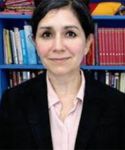
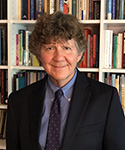
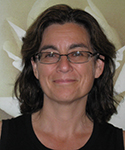
The Faculty members of Pacifica’s M.A./Ph.D. in Mythology and Religious Studies bring a passion for education and a wealth of real-world experience into the classroom. As leaders in the fields, the members of Pacifica’s faculty include authors of international acclaim, renowned lecturers, practicing psychologists, active psychotherapists, registered nurses, theologians, and philosophers. All Mythology and Religious Studies faculty members share a passion for education and are dedicated to working with adult learners. To learn more about the faculty in the M.A./Ph.D. in Mythology and Religious Studies, then read the individual descriptions below.












Curriculum Overview
The Master of Arts degree is awarded after the first two years of study and successful completion of a comprehensive examination. Students seeking the doctorate degree engage in a third year of course work that includes a sequence of research courses and the development of a concept paper for the dissertation. The fourth and fifth years of study focus on dissertation writing and research. Continuing supervision is provided for the completion of the dissertation. The Program meets on a quarterly basis, with summer quarters off. Students meet for Fall, Winter, and Spring semesters.
The curriculum carries a balance of four areas of emphasis: Religion, Literature, Depth Psychology and Culture, and Research. The courses offered in this curriculum overview represent a model of the balance of these areas you will see throughout your course curriculum. Individual courses may be subject to change as they are periodically rotated through the active curriculum to maintain the program’s vibrancy and contemporaneity.
How the Online Format Works
Students will have weekly 1.5-hour live Zoom group sessions for each course, supplemented by asynchronous engagement with course content, their instructors, and other students. This could include discussion posts, group collaborations, advisory meetings, rehearsals, and/or multi-media engagement, depending on the particular course and its modalities and objectives.
The curriculum carries a balance of four areas of emphasis: Religion, Literature, Depth Psychology and Culture, and Research. The courses offered in this curriculum overview represent a model of the balance of these areas you will see throughout your course curriculum. Individual courses may be subject to change as they are periodically rotated through the active curriculum to maintain the program’s vibrancy and contemporaneity.
How the Online Format Works
Students will have weekly 1.5-hour live Zoom group sessions for each course, supplemented by asynchronous engagement with course content, their instructors, and other students. This could include discussion posts, group collaborations, advisory meetings, rehearsals, and/or multi-media engagement, depending on the particular course and its modalities and objectives.
First Year
Second Year
Third Year
*Writing projects for this course take place away from campus. This curriculum may vary depending upon evolving academic needs. The required fourth and fifth years of study focus on reading, research, and dissertation writing.
Graduation Requirements
Degree Requirements For Graduation
- Students must complete 75 quarter units to fulfill the unit requirement for graduation.
- A minimum grade of “C” is required in each completed course. A cumulative grade point average of 3.0 must be maintained.
- Students must attend at least two-thirds of each course.
- Students must successfully pass a Comprehensive Examination during the second year of course work. Each exam essay must receive at least 70 points. The M.A. degree is awarded when this is achieved along with the completion of 38 quarter units. To be eligible to continue taking course work for the Ph.D. degree, students must receive at least 80 points for each exam question.
- Students must pass an Oral Consultation pertaining to a concept paper for the dissertation.
- Students must submit and defend an original dissertation accepted by the faculty.
Comprehensive Examination
The Comprehensive Examination is a written exam taken during the second year of the program that examines students’ understanding of theoretical perspectives pertaining to myth, as well as their ability to apply them to particular cultural traditions. It also assesses students’ ability to reflect on myth in relation to depth psychology, literature, and cultural issues. In addition, an oral consultation takes place in the Dissertation Formulation course during the third year of the program. The purpose of this assessment is to raise critical questions pertaining to the proposed dissertation project. Students must successfully incorporate the critique of this consultation into their dissertation concept papers in order to be advanced to candidacy.Doctoral Dissertation
The dissertation requirements include successful completion of the advanced research courses: Religious Studies Approaches to Mythology, Research Strategies for Dissertation Writing, and Dissertation Formulation. Students must produce an acceptable Dissertation Concept Paper before enrolling in Dissertation Writing. The Dissertation Committee is composed of a Chair, a Reader, and an External Reader. Each member must possess an earned doctorate degree based on a dissertation, unless this requirement is waived by the Research Coordinator of the Mythological Studies Program.Program FAQs
What are the residency requirements?Beginning Fall 2026, there is no residency requirement, but there are two optional in person retreats per year. Every spring, there is an optional spring symposium for students to present research. Additionally, there are optional in-person workshops with the faculty.
How does the online format work?
Students will have weekly 1.5-hour live Zoom group sessions for each course, supplemented by asynchronous engagement with course content, their instructors, and other students. This could include discussion posts, group collaborations, advisory meetings, rehearsals, and/or multi-media engagement, depending on the particular course and its modalities and objectives.
What is the curriculum/course structure?
Students take 2 courses per quarter to engage deeply with a given subject area. We also host a series of “Advanced Studies in Mythology” courses that open the door to rotating courses that cover special mythological subjects in depth inspired by cutting-edge faculty research, to allow for greater diversity in course material. Some courses in the active curriculum are subject to rotation. In Spring there is a 1-day masterclass with a guest instructor, called a Colloquium, which is 1 unit. For doctoral students, we have a Self-Directed Studies requirement, which can be completed at any point in the program. This is an opportunity for students to receive credit through activities of their choice with an emphasis in Myth and Religious Studies (retreats, workshops, conferences, etc.) that supplement their coursework.
In Spring of the second year, students take a Comprehensive Examination for completion of the master’s degree and eligibility for doctoral studies.
The doctoral dissertation can be completed through a theoretical model or an arts-based research model that incorporates a theoretical treatment and a creative production (poetry book, playscript, art installation, etc.)
What is the time commitment for this program?
Most of our courses are 3 units, which means 30 hours of contact time with course materials in a combination of synchronous and asynchronous modalities per course. In most instructional weeks, students will need to be present for synchronous, online Zoom sessions for 1.5 hours.
The Institute’s attendance policy requires all students to be present for 2/3 of all synchronous class sessions. Students are expected to follow up with their instructor in the event of missing a class session.
What do I do if I miss a session?
The Institute’s attendance policy requires all students to be present for 2/3 of all class sessions. Students are expected to follow up with their instructor in the event of missing a class session.
What does the format look like?
Generally students meet with their instructors for 1.5 hours per week per course with the exception of some asynchronous activities at the professor’s discretion.
What are the technology requirements for this program?
Students must be able to meet at a computer with a camera.
How can I set myself up for success while taking classes?
- Remain curious about the breadth of approaches and content you will meet in the program and anticipate some larger questions you may want to approach through your doctoral dissertation. If a burning question finds you that you might want to address in your dissertation, , let it lead you into your course papers, but don’t worry about it if this does not happen right away. .
- Stay in touch with your cohort and your faculty members between sessions.
- Complete your assignments and final papers in a timely manner—it is possible to take incompletes in courses and turn in assignments later, but given the year-round rhythm of the Program, it can be difficult to balance coursework from a previous quarter with that of a current quarter.
- Let not perfection be the enemy of progress. Approach papers and assignments as opportunities for exploration and discovery rather than the need to prove yourself.
- Find opportunities (conferences, art shows, etc.) to share your work outside of Pacifica throughout your degree program—strengthen your network of professional relationships and broaden the areas of impact for your work.
Enroll Today
Apply Now
For information regarding this program please contact the Office of Admissions at 805.879.7305, or at applicant@pacifica.edu.
All of Pacifica Graduate lnstitute’s degree programs are accredited by the Western Association of School and Colleges (WASC) and federal financial aid is available for those who qualify.
All of Pacifica Graduate lnstitute’s degree programs are accredited by the Western Association of School and Colleges (WASC) and federal financial aid is available for those who qualify.